2 Small Ways to Build Structure for a Stronger Season
Every August, I notice the same thing in my studio: students come back from summer energized and full of plans.
New repertoire. New goals. More organized practice. More consistency. Maybe even finally learning all those minor scales.
And then, by week three, half of those plans have gone bye-bye.
The problem usually isn't the goals. Big, ambitious plans can be wonderful. The problem is that goals without structure are difficult to sustain.
The beginning of a new season is a chance to reset your routines, establish better habits, and take on work that's difficult and worthwhile. But the answer isn't necessarily more discipline.
Here are two small things I like to do instead.
1. Make the habit ridiculously small
Behavior scientist BJ Fogg, author of Tiny Habits, suggests shrinking a behavior until it's so small you can't fail.
Instead of:
"I will practice scales for an hour every day."
Try:
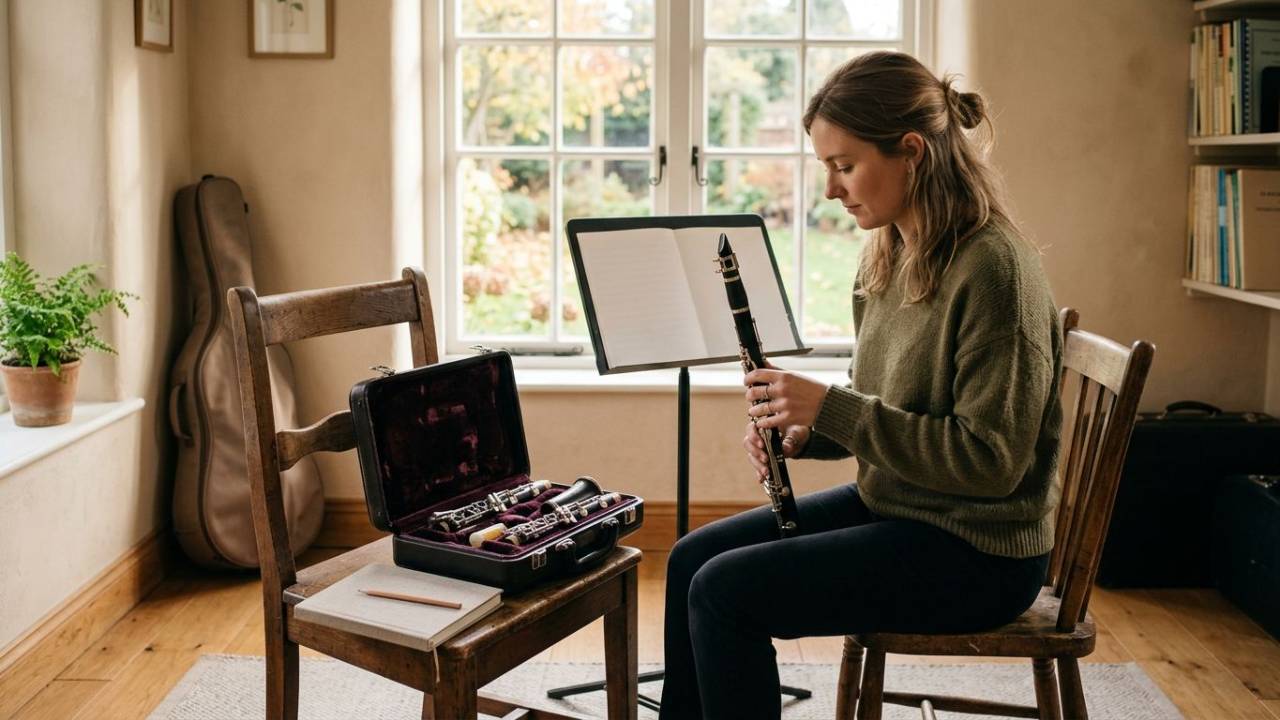
"I will open my instrument case."
That's it.
It might seem too small to matter, but that's exactly the point. You're creating an easy entry point into the behavior rather than relying on motivation to get started.
Once the case is open, practicing becomes much easier to begin.
2. Tie the habit to something you already do
Fogg calls this an anchor: connecting a new tiny behavior to something that already happens naturally in your day.
For example:
- After I pour my coffee, I open my practice journal.
- After I put my case down, I write one line about yesterday's session.
- After I finish warming up, I practice one scale variation.
You're not creating another decision from scratch. You're attaching the new habit to something that's already part of your routine.
Structure beats willpower
These aren't elaborate plans. They're pieces of infrastructure.
And that's what matters when week three arrives and the excitement of a new season starts to fade.
Discipline is a feeling, and feelings are weather. Some days the motivation is there; some days it isn't.
You can't build an entire season on weather.
Build the infrastructure instead. Create small, repeatable structures that can hold you up even when the motivation doesn't show up.
That's how you give your goals a chance to actually make it past week three.
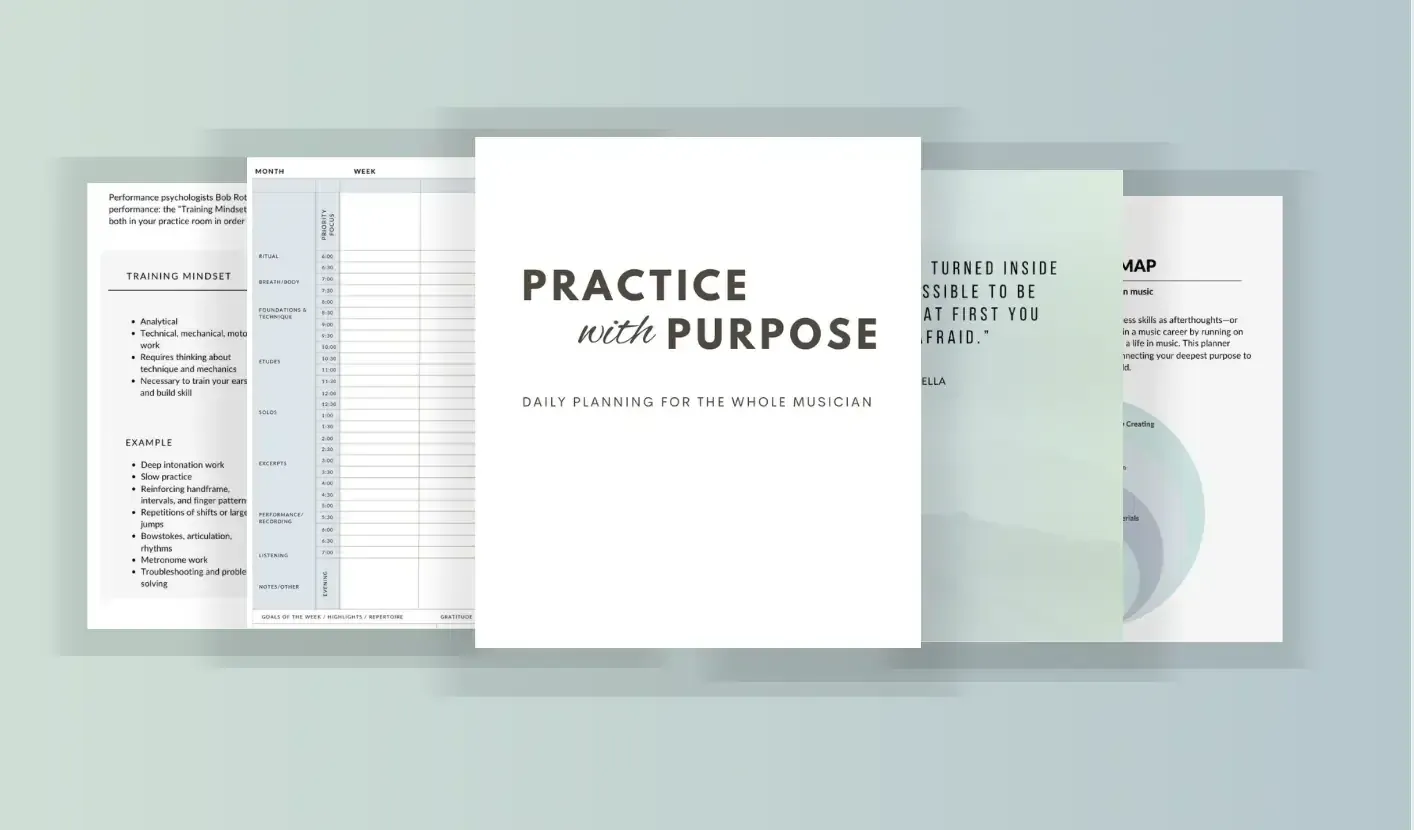
That's what the Music360 Practice with Purpose Planner is built to be — infrastructure, in a form quiet enough to feel like sanctuary.
|
|
- A continuous six-month spread, made to move with your actual life, not against it.
- An audition tracker, so deadlines and requirements live on the page, not in your head
- Habit trackers, so you can see the pattern instead of guessing at it
- Practice design pages, so your time in the room has a shape before you walk in
- Dot-grid space to write and take notes on lessons
- 50+ pages of resources (which you can cut out if this isn't your first planner :))
It comes with a companion course, so you're not just filling in pages — you're learning the thinking that makes the pages work.
Think of it as a small sanctuary with clear walls. A quiet space to dream, organize, jot, doodle, create. And also: structured enough to guide you forward.
You don't skip tuning because you're already warmed up. You tune because it's the thing that lets everything after it go well. Think of this as your tuning note!
Cheering for you,
Ixi
P.S. The Autumn Seasonal Practice: LIVE group work that begins on the fall equinox, Sept 22. It's a small, intentional space for musicians who want to harness the energy of this season to do three things: take honest stock of what the summer actually produced, make deliberate choices about what to carry forward, and step back into the momentum of the professional year without losing the thread of who they've been becoming.
|
|