The Secret to Creating More Luck in Your Music Career

You've probably heard the advice: focus on what you can control and let go of what you can't.
It's good advice. But what if there's a third option?
Lately, I've been thinking about a framework from Stephen Covey's The 7 Habits of Highly Effective People. It's especially useful for musicians navigating auditions, career decisions, entrepreneurship, and an industry that continues to evolve.
The framework is built around three circles: Control, Influence, and Concern.
Circle 1: Control
We've heard about this one. This is the circle that is truly yours.
Your preparation. How you warm up on audition day. What you eat. How you sleep. Whether you trust your work or spiral into one more anxious practice session before walking into the room.
These are the things you can directly control.
Yet many musicians spend enormous amounts of energy trying to control things that don't belong in this circle, leaving themselves exhausted before they've even played a note.
Circle 2: Influence
This is where many musicians leave opportunity on the table.
You can't control whether a committee already has someone in mind. But you can influence how you're known within the musical community. You can build relationships, share recordings, contribute to projects, and show up consistently in professional spaces.
You can't control whether a dream position opens. But you can increase your visibility, strengthen your artistic voice, and create work that speaks for you when you're not in the room.
Influence is slower than control, but it compounds over time.
Circle 3: Concern
This is the largest circle—and often the most draining one.
Who else is auditioning. Whether the committee is tired. Industry politics. The future of classical music. Things people say online.
These concerns are real, but they don't deserve your practice time, your sleep, or your sense of self-worth.
Being aware is helpful. Living there is not.
How to Increase Your Exposure to Luck
The most interesting things happen in the Circle of Influence.
This is where opportunity, timing, relationships, and what many people call "luck" begin to appear.
When you say yes to opportunities that stretch you, introduce yourself to new communities, create projects, share your work, and stay visible, you increase your exposure to unexpected possibilities.
You aren't waiting for luck.
You're creating more opportunities for luck to find you.
In other words, you're turning passive waiting into active opportunity.
Focus Your Energy Wisely
The musicians who build sustainable careers aren't always the most talented.
They're often the ones who understand which circle they're operating in.
They focus on what they can control, invest in what they can influence, and refuse to spend their lives trapped in worry about things they cannot change.
Before your next practice session, ask yourself:
What am I actually preparing for, and what am I simply worrying about?
That question alone can change where your energy goes.
-Ixi
p.s. Want a trail of reading to go down?
Further reading:
- Stephen Covey popularized the circles framework in The 7 Habits of Highly Effective People — still worth a read decades later
- The "circle of influence" concept actually traces back to social psychologist Kurt Lewin in the 1940s
- For a quick modern take: A Trick to Stop Worrying About What You Can't Control — Psychology Today
-
p.p.s. If you want a space that holds all of this, the mindset work, the practical tools, the environment that supports the work, that's what Thrive is. You can learn more and join us HERE.
|
|
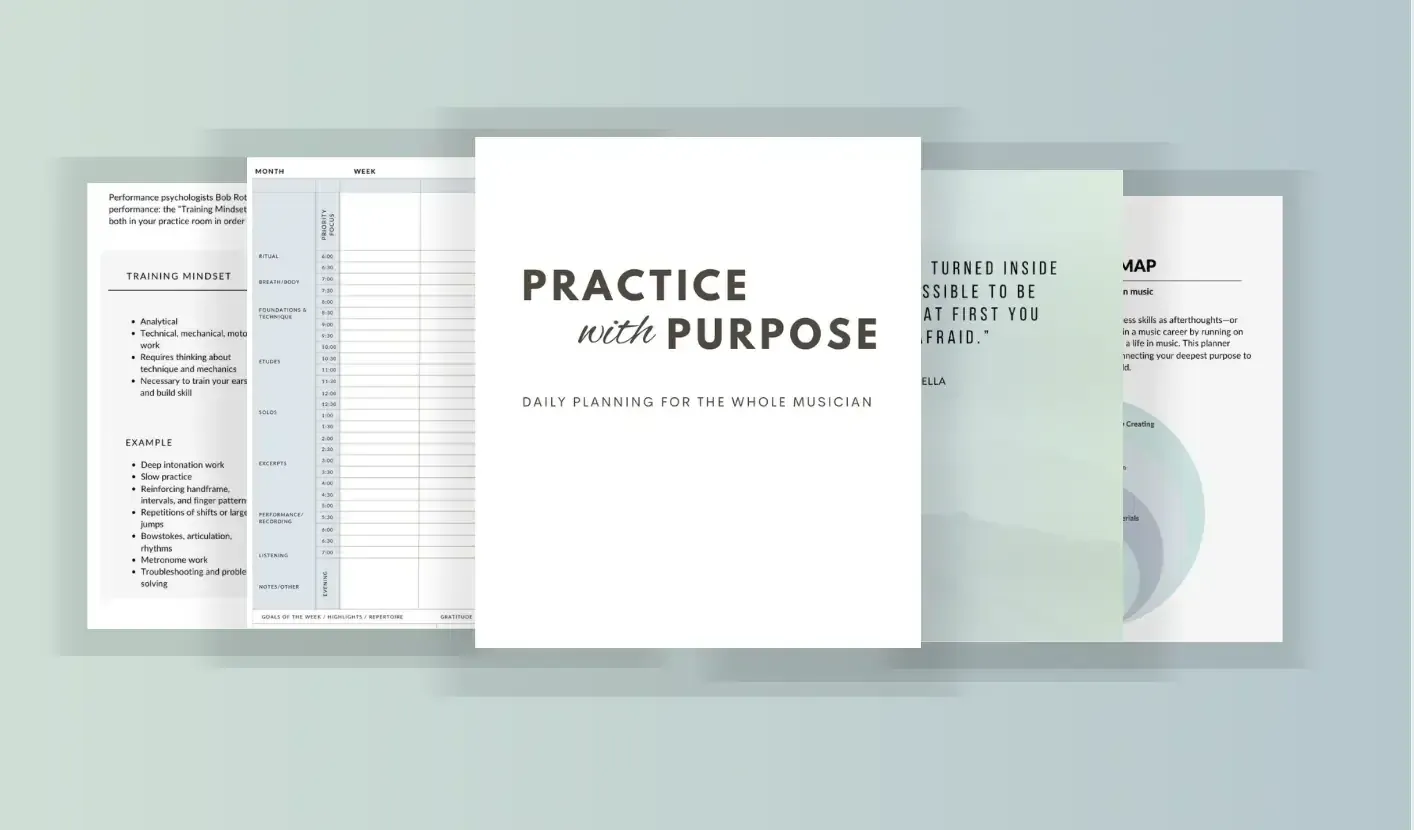
The Practice with Purpose framework is $99 fo 2 6-month planners! It includes:
- the complete framework ($37 system)
- your 2 physical planners included (a $80 value, shipped to your door)
- training modules and ongoing resources
A system built on alignment, connection and flow.